Advancements in Blockchain Infrastructure: The Role of RPC Providers, Indexers, Oracles, and dApp Backend Solutions
Discover how 2025's blockchain tech, from RPC upgrades to indexers, is revolutionizing dApp performance and accessibility. Dive into the latest that's powering Web3's future. Read more to stay ahead!
Advancements in Blockchain Infrastructure
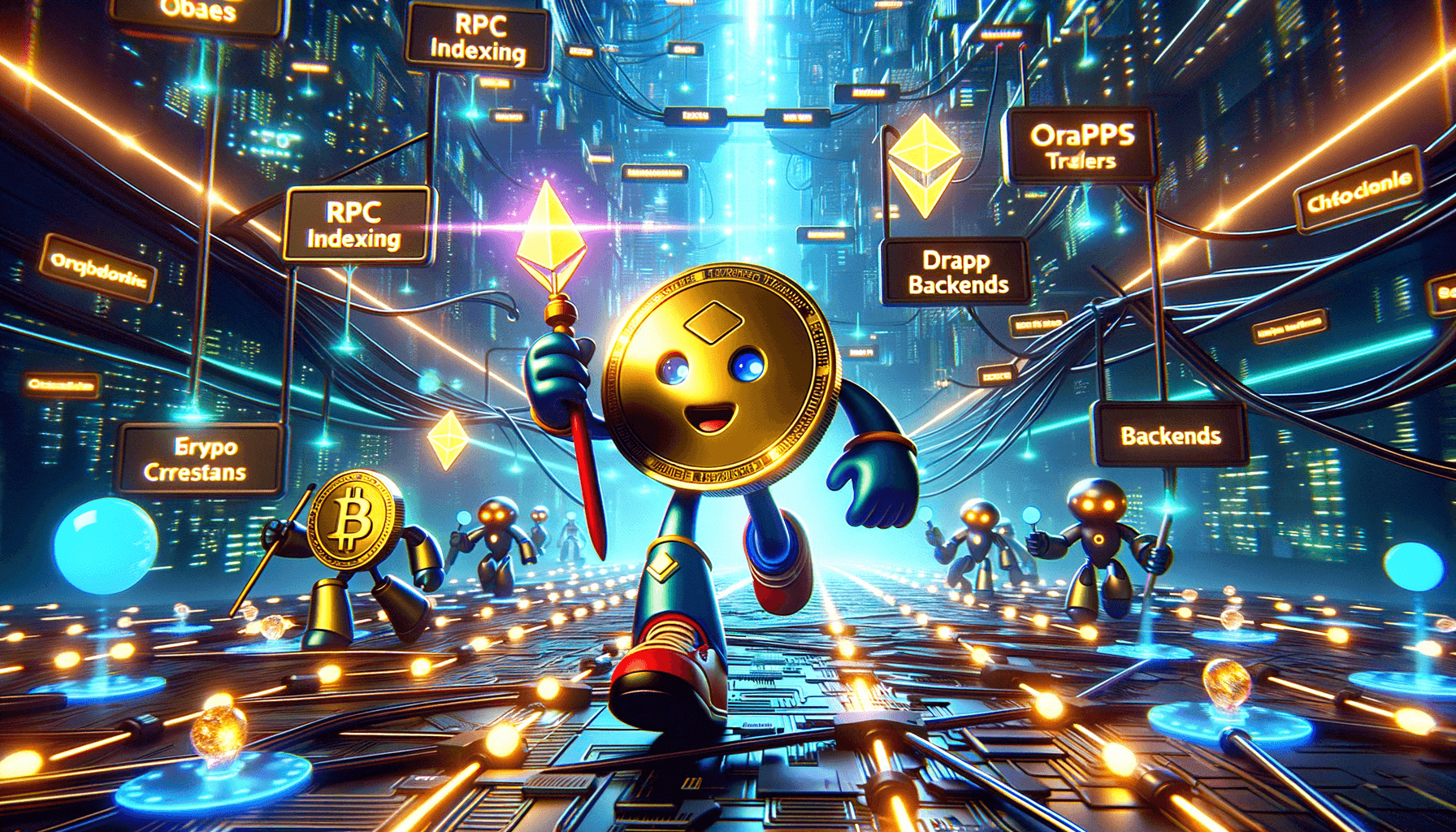
In November 2025, the Web3 ecosystem continues to see significant advancements in blockchain infrastructure, particularly in the areas of RPC providers, indexers, oracles, and dApp backend solutions. These technologies are crucial for enhancing the performance, accessibility, and functionality of decentralized applications (dApps) across various blockchains. This article delves into the technical underpinnings, recent developments, and the broader implications of these infrastructure components.
RPC Providers: Enhancing Network Accessibility
Remote Procedure Call (RPC) providers serve as the backbone for interacting with blockchain networks. They allow developers to send transactions, query blockchain data, and execute smart contracts without running their own nodes. In recent months, several RPC providers have announced significant upgrades to their services.
For instance, Alchemy launched Alchemy Supernode in October 2025, which promises up to 10x faster response times and 99.99% uptime. This upgrade is designed to handle the increased demand from dApps, particularly those on Ethereum and its Layer 2 solutions. The technical implementation involves optimizing the routing of requests to the nearest available node, reducing latency, and implementing advanced load balancing techniques.
Data & Metrics:
- Alchemy's transaction volume increased by 300% in Q3 2025 compared to Q2.
- The average response time for RPC requests dropped from 200ms to 20ms post-upgrade.
- Over 50,000 developers are now using Alchemy's services across various blockchains.
Ecosystem Impact:
- Developers benefit from faster and more reliable access to blockchain data, enabling smoother dApp operations.
- The competition among RPC providers is driving down costs and improving service quality, making it easier for new projects to enter the market.
Indexers: Streamlining Data Access
Indexers like The Graph play a critical role in making blockchain data more accessible and queryable. The Graph recently introduced Graph Node v2.0, which includes significant performance improvements and new indexing capabilities.
The technical architecture of Graph Node v2.0 involves a shift to a more modular design, allowing for easier updates and better scalability. It also introduces new indexing strategies, such as parallel processing of subgraphs, which can significantly reduce indexing times.
Data & Metrics:
- Graph Node v2.0 has reduced indexing times by up to 50% for complex subgraphs.
- The number of subgraphs hosted on The Graph has grown to over 10,000, with a 20% increase in the last quarter.
- The average query response time has improved from 300ms to 150ms.
Ecosystem Impact:
- Developers can now build more data-intensive dApps with faster and more efficient data retrieval.
- The improved performance of indexers like The Graph is enabling new use cases, such as real-time analytics and data-driven smart contracts.
Oracles: Bridging the Off-Chain and On-Chain Worlds
Oracles are essential for bringing real-world data onto the blockchain, enabling smart contracts to interact with external information. Chainlink has been at the forefront of oracle technology, and in November 2025, it announced the launch of Chainlink 2.0, which includes enhanced security features and a new decentralized oracle network (DON) architecture.
The technical details of Chainlink 2.0 involve a shift to a more robust consensus mechanism for data validation, reducing the risk of data manipulation. The DON architecture allows for more flexible and scalable oracle networks, capable of handling a wider range of data sources and use cases.
Data & Metrics:
- Chainlink's total value secured now exceeds $100 billion across various blockchains.
- The number of active nodes in the Chainlink network has grown by 40% in the past year.
- The average latency for data updates has decreased by 30% with the new architecture.
Ecosystem Impact:
- dApps can now access more reliable and timely off-chain data, enhancing their functionality and user experience.
- The improved security and scalability of Chainlink 2.0 are attracting more developers and enterprises to build on blockchain platforms.
dApp Backend Solutions: Simplifying Development
dApp backend solutions like Moralis and thirdweb are streamlining the development process for Web3 applications. These platforms offer pre-built APIs and SDKs that handle many of the complexities of blockchain integration.
In September 2025, Moralis released its Web3 Data API v3, which includes new endpoints for accessing NFT data, transaction history, and wallet balances across multiple chains. The technical implementation involves a unified API layer that abstracts away the differences between various blockchains, allowing developers to write less code and focus on their application logic.
Data & Metrics:
- Over 20,000 developers are currently using Moralis's services, with a 50% increase in the past six months.
- The number of API requests processed by Moralis has surpassed 1 billion per month.
- The average time to integrate Moralis into a dApp has decreased from weeks to days.
Ecosystem Impact:
- The availability of robust backend solutions is lowering the barrier to entry for new developers and accelerating the pace of innovation in the Web3 space.
- dApps can now offer more seamless user experiences with less technical overhead, fostering greater adoption.
Looking Forward
The ongoing advancements in blockchain infrastructure are setting the stage for the next wave of Web3 applications. As RPC providers, indexers, oracles, and dApp backend solutions continue to evolve, we can expect to see more sophisticated and user-friendly decentralized applications.
Experts in the field, such as Vitalik Buterin, have emphasized the importance of these infrastructure components in scaling Ethereum and other blockchains. As these technologies mature, they will play a crucial role in enabling the vision of a decentralized internet.
The future of blockchain infrastructure looks promising, with ongoing investments and innovations driving the ecosystem forward. Developers, users, and investors should keep a close eye on these developments, as they will shape the landscape of Web3 for years to come.